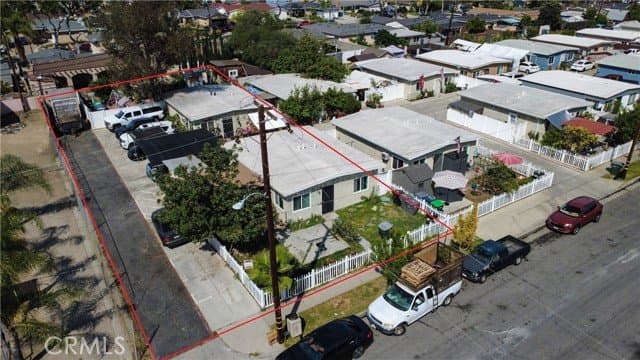
At a traditional listing, a buyer can make an offer, negotiate and arrange financing over time. An auction works differently. When you place a bid, you are making a commitment, so your funding plan needs to be settled before the bidding window opens. For 301-303 Grace Ave in La Habra, that window runs from 8:00 AM to 12:00 PM Pacific on December 14, 2026, with a starting bid of $1,243,000.
Start with the auction terms
Before choosing a funding route, read the auction terms. Details such as deposit requirements, fees, closing timeline and any reserve are set out there, and they are not covered in this article. Your lender and your funding source need to be comfortable with those terms, particularly the timeline. Ask early, because some loan processes take longer than others.
Option one: cash
Cash is the simplest structure. It avoids appraisal and underwriting steps that can add time or uncertainty, which is why many auction buyers prefer it. The trade-off is that a large amount of capital is tied up in one property.
With a stated NOI of $29,486 and a starting bid of $1,243,000, the initial yield is about 2.4%. A cash buyer should consider whether that capital could work harder elsewhere, and whether the rent upside and value-add plan justify holding it here.
Option two: conventional financing
A conventional loan can reduce the cash needed. Some practical points:
- Pre-approval matters. Talk to a lender before you register, and ask specifically whether they are comfortable with an auction purchase and the timeline in the terms.
- Occupancy affects terms. Loan terms can differ for an owner-occupant and an investor. Tell your lender your real intentions.
- Appraisal risk exists. If a bid exceeds what an appraiser supports, you may need to cover the difference with extra cash.
- Debt service must work. Model the loan payment against the rents, using the in-place $3,990 per month and the $4,800 pro-forma as separate cases.
This article does not quote rates or terms, because they change and vary by borrower. A lender is the right source.
Option three: cash first, loan after
Some buyers use a cash-to-loan approach. They close with cash or short-term funds, then arrange longer-term financing afterwards. It can help meet a tight timeline, but it adds its own risks:
- The later loan is not guaranteed, so you need a fallback if conditions change.
- Short-term funds can carry their own costs and deadlines.
- The property must qualify for the loan you want, which can depend on its condition and income at that point.
If you plan to use this route, speak with a lender about it before bidding, not after.
A short pre-bid checklist
- Confirm your funding source and obtain written pre-approval or proof of funds as the auction process requires.
- Read the auction terms for deposits, fees and the closing timeline.
- Model taxes on your purchase price, since California generally reassesses property on a change of ownership.
- Set a maximum bid in advance, so the pace of the bidding does not set it for you.
- Review the due diligence documents, available through the property site's Register for Access form.
Remember the access limits
The offering is drive-by only, with no interior showings. The Matterport 3D tour, photos and floor plan show the interior, and your lender may have its own requirements about condition and inspection. Raise these early.
The auction is run by Global Estate Hub with Century Real Estate Group Inc., a DRE-licensed auctioneer. Registration or pre-registration is required to bid.
If you are comfortable with your funding plan and the terms, the next step is to register to bid through the property site. Please consult your lender, CPA and attorney before you commit.
This article is for general information only and is not investment, tax or legal advice. Figures come from the listing materials; verify independently and consult your own advisors.